
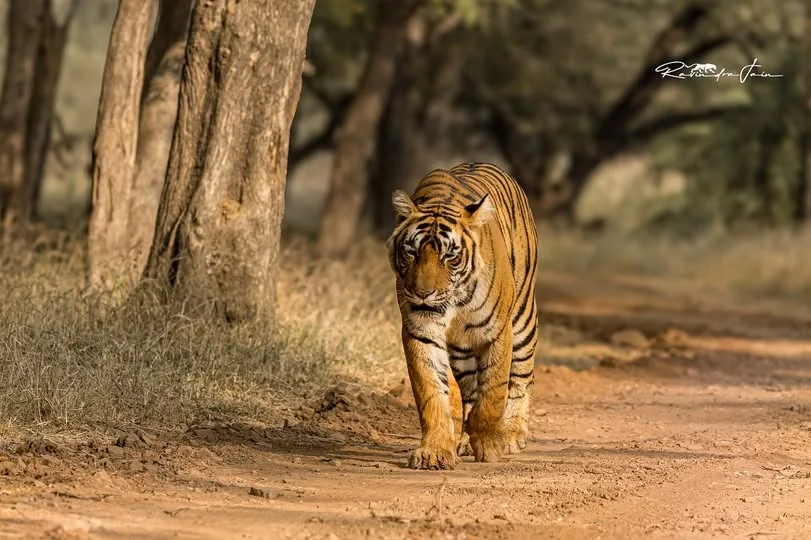
Set in Rajasthan’s Sawai Madhopur district, Ranthambore National Park is one of India’s premier destinations for wildlife and nature lovers. The park offers a memorable safari, with the chance to see Royal Bengal tigers in front of your eyes.
Looking for an adventure filled with rich history, stunning wildlife, and awe-inspiring landscapes? A trip to Ranthambore Tiger Reserve is just what you need.
Why Ranthambore Is a Top National Park in India
Ranthambore stands among India’s most beautiful and adventurous wildlife destinations. From its tiger sightings to its history, it gives wildlife photographers and nature lovers an experience like no other.
High Tiger Density and Sightings
The park is famous for its number of tigers, which makes it one of the best places in India to spot a Bengal tiger, and a great chance to see these animals up close.
Its water bodies, open grasslands, and less dense groves make tigers easier to spot. Visitors often see them basking in the sun, hunting, and walking the trails.
Scenic Beauty and Unique Landscape
Ranthambore’s terrain takes in dry deciduous forest, rocky hills, scenic lakes, and open meadows, a perfect setting for wildlife. The play of water, light, and rugged landscape makes it a haven for wildlife photographers.
Accessibility
Ranthambore is easily reached by road, air, or rail. It is just a few hours from Jaipur and Delhi, which makes it an easy trip for domestic and international travellers alike.
Rich Wildlife Diversity
Tigers steal the spotlight, but the park is also home to leopards, jackals, sambar, sloth bears, wild boar, and marsh crocodiles. With more than 300 bird species, including kingfishers, crested serpent eagles, and peacocks, it is a treat for bird lovers too.
Well-Organised Safari Zones
Ranthambore has several zones, each with its own landscape and wildlife. Zones 1–5 are core zones, and zones 6–10 are buffer zones.
Safari Options in Ranthambore National Park
On a Ranthambore safari you pass through dry deciduous forest, narrow valleys, hillocks, and pristine lakes. You can choose between a jeep and a canter.
Jeep Safari
The jeep is the best way to enjoy wildlife sightings. Safaris can be booked up to 90 days before your trip, and last-minute bookings are also available. The six-seater is open on both sides, so you can watch wildlife closely, and it is sure to give you the ultimate thrill.
Canter Safari
The canter seats 20 and follows the same routes as the jeep. It gives a good view and a close look at the animals, and for a group of more than six it is better value than a jeep.
Places to Visit in Ranthambore National Park
Ranthambore Fort
Ranthambore Fort is a highlight for nature fans and history lovers alike, a striking blend of history and architecture. The Trinetra Ganesh Temple is its main attraction, and you can also see Badal Mahal, Jogi Mahal, and Hammir Court.
Surwal Lake
Surwal Lake is a relaxing sight for tired eyes, set within the national park. The area is also popular for birdwatching, especially in the colder months, when migratory birds are often spotted.
Padam Talao
The largest lake in Ranthambore National Park, Padam Talao has the iconic Jogi Mahal on its edge and lush green forest all around it.
The Best Time to Visit Ranthambore National Park
The best time to visit is from October, in the dry season, when mild temperatures and little rain give good visibility and a better chance of spotting tigers, sloth bears, and leopards. The summer months, from April to June, are very hot, although April is still comfortable, with highs of about 35°C. In summer, tigers also visit the waterholes often to stay hydrated. Many zones close to visitors during the monsoon, from July to September.
Wrap Up
No one wants to miss the chance to see Bengal tigers and natural beauty together at Ranthambore. Its diverse wildlife, cultural richness, and captivating landscapes stay with visitors long after they leave. Whether you are a nature lover, an adventure seeker, or just want a relaxing break, it has something for everyone.